

Pay attention to our latest news and exhibitions.


Article Directory
- 1 Bulk Rubber Seal Strips Fail When the Specification Is Vague
- 2 Choose the Right Rubber Compound for the Environment
- 3 Verify Cross-Section, Hardness and Compression Set
- 4 Adhesive Backing and Installation Conditions Matter More Than You Think
- 5 Confirm Temperature, UV, Chemical and Noise Requirements
- 6 Think About the Application Before You Commit to a Profile
- 7 Qualify the Supplier, Not Just the Sample
- 8 Packaging, Lead Time and Total Landed Cost in a Bulk Order
Bulk Rubber Seal Strips Fail When the Specification Is Vague
A window fabricator receives 15,000 linear meters of rubber seal strips. The cross-section looks correct, but the hardness is too high, and the sashes are difficult to close. Another buyer chooses an adhesive-backed strip and installs it at 5°C; the liner releases within weeks. Both problems were avoidable because the failure happened during specification, not production.
Buying rubber seal strips in bulk is different from approving a free sample. A sample is inspected once and discarded; a bulk order becomes part of a production process. The cost of correcting a bad batch is far higher than the price of the strip itself. Therefore, the first question is not What is the price per meter? but What conditions will this strip face, and what tolerances can my line accept?
- Define the environment before talking about price.
- Ask for production tolerances in writing.
- Require a pre-production sample from the actual line, not from a laboratory.
Choose the Right Rubber Compound for the Environment
The material decision controls every other specification. EPDM, PVC, and brush pile strips are not interchangeable. The best choice depends on exposure, movement, and cost.
EPDM for exterior and high-load sealing
EPDM rubber has strong resistance to ozone, UV, water, and temperature changes, and it normally shows low compression set. That makes it a dependable default for exterior doors, windows, aluminum frames, automotive doors, and stationary glass. If an export order covers different climates, EPDM gives you the broadest margin of safety.
PVC for cost-sensitive and chemical-resistant projects
PVC strips cost less and, depending on the compound, can resist chemicals, moisture and sunlight well. They tend to be harder and may stiffen at low temperatures. For interior glazing, industrial enclosures and noise dampening, a UV-resistant soundproof PVC rubber strip is often a practical choice.
Brush pile and siliconized strips for moving interfaces
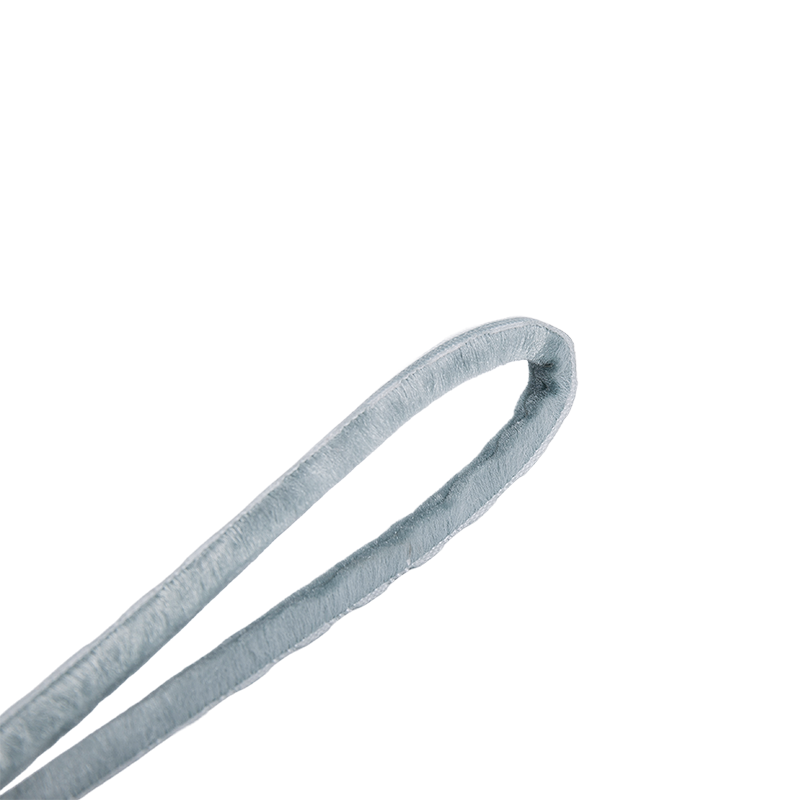
Sliding windows and doors need a seal that does not add friction. Brush pile strips, often siliconized or fitted with a plastic fin, block dust, air and some water while allowing the sash to move smoothly. They are not a thermal replacement for dense EPDM, but they are the right tool for sliding interfaces.
| Property | EPDM | PVC | Brush pile / siliconized |
|---|---|---|---|
| Best suited for | Exterior doors, windows, automotive glass | Interior, industrial, chemical and UV exposure | Sliding windows, doors, dust and air barriers |
| Temperature range | Broad, formulation dependent | Moderate; can stiffen in cold | Limited; not a primary thermal barrier |
| Weather resistance | Excellent | Good to very good | Moderate; fin or film adds protection |
| Compression set | Low | Moderate to high | Not applicable for brush type |
| Typical bulk use | Architectural and vehicle sealing | Glazing, trim, noise control | Sliding sashes and dust seals |
Verify Cross-Section, Hardness and Compression Set
Material alone does not guarantee fit. The profile must match the frame groove, the closing force must suit the hardware, and the strip must recover after long periods under load.
Why cross-section tolerances matter
When you buy in bulk, the profile cannot vary from coil to coil. Ask the supplier for a dimensioned drawing. Measure samples from different production runs with a caliper. A profile that is 0.2 mm too thick might barely matter on one window but cause slow closing on thousands of windows. For more detail, see choosing EPDM strip dimensions, hardness and shape.
Hardness and compression set are not cosmetic
Hardness, usually expressed in Shore A, controls how much force is needed to close a door or window. Too hard means poor compression and difficult operation; too soft means poor sealing and premature wear. Compression set measures whether a rubber strip returns to its original shape after being compressed for hours or days. A low compression set is critical for gaskets that will be squeezed in a closed frame for years. Request compression set data, not just material name, before you finalise a bulk order.
Adhesive Backing and Installation Conditions Matter More Than You Think
Many bulk rubber seal strips are self-adhesive. The adhesive reduces installation labour and is suitable for many retrofit lines, but it must be matched to the substrate, the temperature at installation, and the expected service life.
Self-adhesive vs mechanical fixing
Some strips are pressed into grooves without adhesive; others carry a pressure-sensitive adhesive layer covered by a release liner. For rough, oily or dusty surfaces, a mechanical or groove-mounted profile is safer. For clean frames and quick installation, the high-density self-adhesive EPDM door weatherstripping is a strong option because the dense body gives firm support while the adhesive carrier holds it in place.
Surface preparation and temperature range
Adhesive failure is often an installation problem. The surface must be free of oil, release agents and dust. Powder-coated and anodized frames need different adhesion tests. Installation temperature matters: some adhesive strips should not be applied below 5°C. If your production schedule runs in winter, test at that temperature before committing. You can also check how long such strips stay functional in our self-adhesive rubber seal strip lifespan guide.
Confirm Temperature, UV, Chemical and Noise Requirements
Two strips may look identical and behave differently in cold storage, tropical sunlight, coastal salt air, or near solvents. For bulk orders, list the conditions that the strip must resist, not just the frame dimensions.
Temperature range and UV resistance
Define the minimum and maximum temperature for the application, and state whether the strip will be exposed to direct sunlight. EPDM handles a broad range and strong UV. PVC is more likely to stiffen in cold and may need a UV-stabilized formulation. Silicone or high-temperature EPDM compounds are used where heat is a factor.
Chemical, moisture and noise requirements
Check whether the strip will contact engine oil, fuel, cleaning agents, or acidic rain. In automotive door and windshield applications, water and dust ingress is often the real test. The same product family can be suitable for both architecture and vehicles, but the compound, density and adhesive must be checked against the actual liquid or airborne contaminants.
Think About the Application Before You Commit to a Profile
The end-use determines whether you need dense rubber, foam rubber, brush pile, or a combination. A profile that works in an awning window may be unsuitable for a sliding patio door.
Sliding doors and windows
For sliding interfaces, the seal must move with the sash without increasing handle force. The right option is often a low-friction EPDM or brush pile strip. For doors exposed to rain, the waterproofing EPDM seal strip for sliding doors is designed to maintain a dense seal while the door moves along its track.
Architectural and automotive glazing
Fixed glass and windshield seals are different from perimeter door seals. They need strong UV resistance, low water absorption, and enough resilience to absorb vibration. If the strip will be fitted around glass, verify the glass edge thickness, frame gap and installation sequence before mass production.
Qualify the Supplier, Not Just the Sample
A perfect one-meter sample tells you very little about 10,000 meters. You are buying the supplier's process, testing capability and consistency as much as the rubber compound.
Quality systems and testing
Ask for ISO9001 certification, SGS test reports, and an in-house laboratory. Fortex(Shanghai) Industrial Co., Ltd., the manufacturer behind this site, states that it operates its own testing equipment, controls quality through production, and exports to Europe, the United States, Japan and other markets. Those claims still need to be checked with documents, factory audits, or a third-party inspection, but they give a starting point for qualification.
OEM/ODM and custom development
Bulk buyers often need a profile that matches a specific frame extrusion. A supplier that can develop tools from your drawing or sample is more valuable than one that only sells standard products. Customisation can include cross-section, hardness, colour, adhesive backing and packaging. For a structured process, use our professional EPDM rubber strip buying guide.
Packaging, Lead Time and Total Landed Cost in a Bulk Order
Once the technical specification is fixed, commercial terms decide whether the bulk order runs smoothly.
Unit lengths, joints and packaging
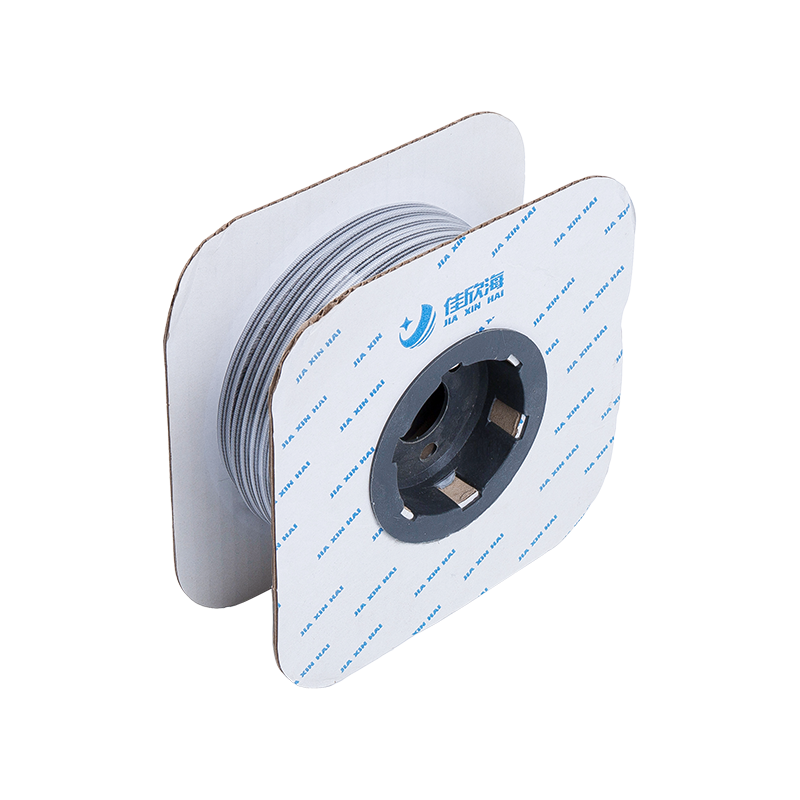
Continuous lengths reduce waste. Ask how many joints per roll, whether the strip is wound with a release paper, and how the rolls are packed. Too many joints create scrap on assembly lines. Packaging that protects against crushing and sunlight is especially important for long international shipments.
Compare total landed cost, not unit price
The lowest unit price is not the lowest cost when you add tooling, samples, freight, customs, packaging, payment terms and rejected material. Ask for a clear cost breakdown and a lead time that includes production, inspection and shipping. A supplier with larger installed capacity—the manufacturer behind this site claims an annual output of more than 20,000 tons—can often keep lead times more stable during peak seasons.
Buying rubber seal strips in bulk is a technical and commercial decision. If you define material, tolerances, adhesive, application requirements and supplier quality before you sign the order, you avoid the hidden costs that turn a low price into an expensive mistake. The real saving comes from a strip that performs in production, not from a price that performs only on a quote sheet.