

Pay attention to our latest news and exhibitions.

Article Directory
A facility manager once asked me why the same window model at two different sites used different rubber seals. One seal was too stiff and forced the window out of its tracks; another was too soft and leaked air whenever the wind picked up. Both strips were the same width. The problem was not the size—it was the profile. The right rubber seal strip profile has less to do with a single dimension and more to do with how the seal compresses, how it is mounted, and what environment it must survive.
Here is the direct answer: choose a profile only after you have measured the gap, defined how much compression is acceptable, selected a material that matches the temperature and chemical exposure, and confirmed the installation method. If you do that in that order, most mistakes disappear.
Know the Basic Rubber Seal Strip Profiles
Rubber seal strip profiles are named after their cross-section shapes. The most common are D, U, T, E, P, O, and rectangular or flat shapes. Each shape has a mechanical purpose.
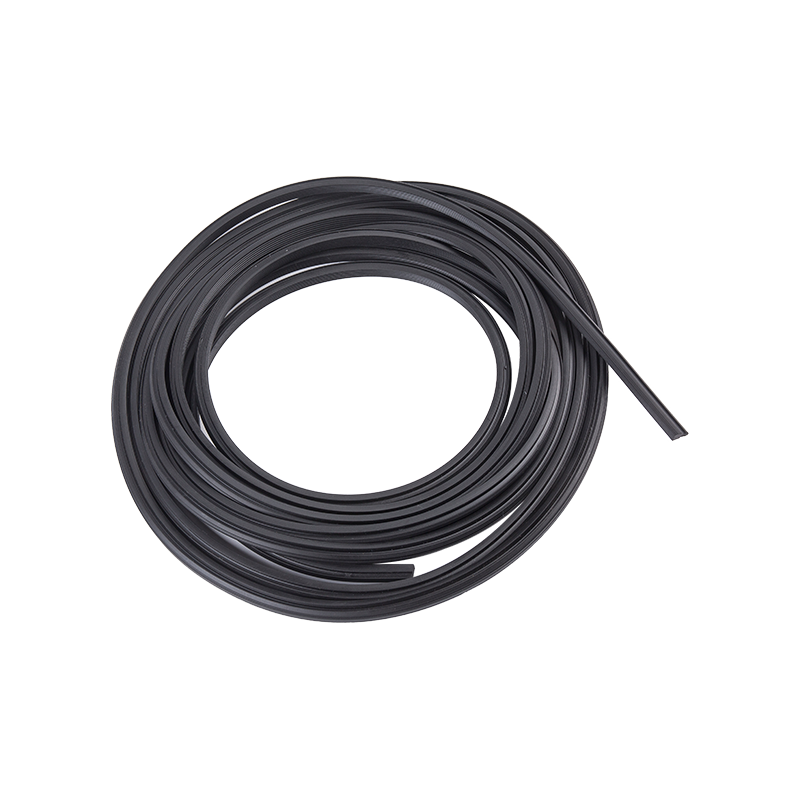
A D-shaped profile combines a flat mounting base with a hollow or solid bulb that compresses easily. It works well on door frames and window perimeters where light pressure keeps the seal in contact. A U-shaped profile (U-channel) grips the edge of a panel or sheet metal, protecting the edge and providing a cushion. A T-shaped profile is often pulled through a slot, with the T head holding the strip in place. E-shaped profiles have multiple hollow chambers that collapse progressively, which is useful when gaps are irregular. A P-shaped profile has a round bulb attached to a stem, giving higher leverage for compression in tight spaces. O-rings or O-shaped strips are mainly for static seals between flat surfaces. Rectangular or flat profiles are used in compression seals where the seal is squeezed between two surfaces, such as window locking gaskets.
The table below summarizes typical applications and the expected compression range for each family.
| Profile | Typical application | Usable compression range |
|---|---|---|
| D | Door frames, window perimeters | 15–30% of bulb diameter |
| U | Edge protection, sliding panel guides | Grips edge; minimal vertical compression |
| T | Slot-mounted gaskets, automotive trim | Compression depends on slot and bulb design |
| E | Irregular gaps, multiple sealing points | 20–40% across the hollow chambers |
| P | Doors, window seals, lift-gate seals | 15–25% of bulb diameter |
| O | Static flat-surface seals | 10–20% of cross-section |
| Rectangle / flat | Locking gaskets, compression under hardware | 15–25% of height |
The Four Selection Criteria That Matter Most
Profile nomenclature tells you the shape, but selection depends on four variables: gap size, compression budget, material, and installation method. Neglect any of these and the seal will perform poorly even if the shape is technically correct.
Measure the Gap and Define Acceptable Compression
Start by measuring the gap width at multiple points along the opening. Doors and windows are rarely perfectly straight; the gap can vary by 1–2 mm or more. Use the minimum gap to determine the uncompressed seal size and the maximum gap to verify that the seal can still touch both surfaces. A general rule is to select a seal whose uncompressed height is 20–40% larger than the nominal gap, then verify that this interference fits within the available closing force. If the compression is too high, the door will not close; too low, and the seal will not block air or water. Our guide to EPDM strip dimensions and hardness explains this trade-off in detail.
Choose the Material: EPDM, PVC, or Silicone
For exterior doors and windows, EPDM is the most common choice because it resists ozone, UV, and temperature extremes from roughly -40 °C to 120 °C. PVC is less expensive and forms a denser surface, but it stiffens in cold weather and has lower UV resistance. Silicone handles extreme temperatures but generally has lower tear strength and a higher price. The material also affects compressibility: solid EPDM needs more closing force than sponge EPDM, but it recovers better over time. If you need one seal that covers a wide temperature range, choose a high-quality EPDM compound, such as a universal self-adhesive EPDM weather stripping seal for stationary windows and windshields. For projects that compare the two polymers, review our comparison of EPDM and PVC rubber strips before committing.
Match Hardness and Density to the Closing Force
Hardness is expressed in Shore A for solid rubber or Shore 00 for sponge. A Shore A hardness of 50–60 is common for window seals, while a Shore 00 of 20–40 works for low-force applications. Sponge rubber profiles (foam seals) compress easily and are ideal for irregular gaps or where handles need a light touch. Dense rubber profiles provide a firm seal and better wear resistance but require a frame that can supply enough clamping force. For example, a locking window gasket is usually dense EPDM because the lock mechanism provides the closure pressure.
Select the Installation Method
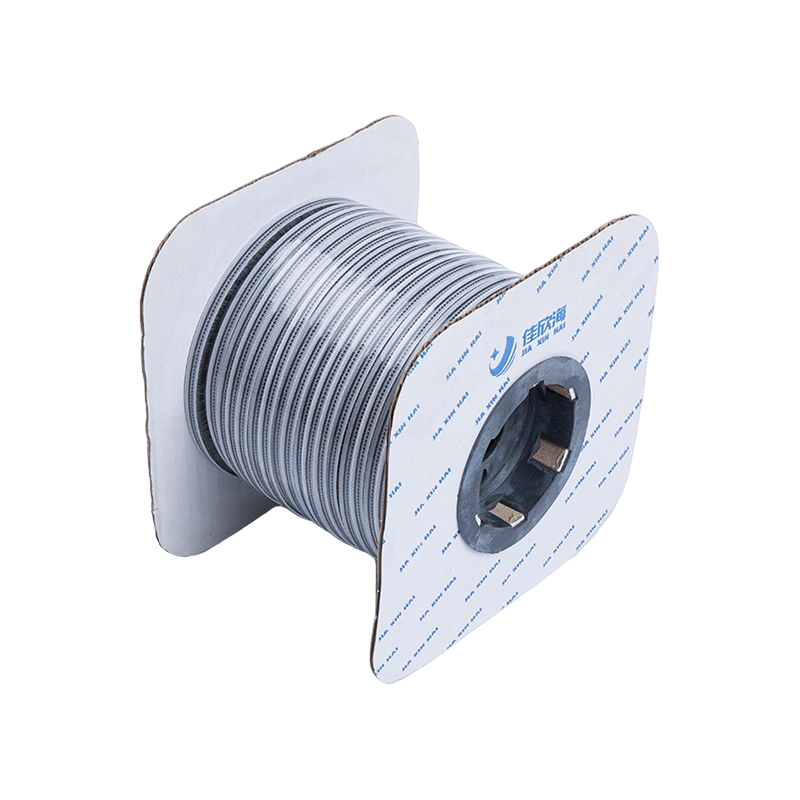
The way the seal is attached often determines the profile more than the cross-section does. Self-adhesive strips are the fastest to install and work well on flat, clean surfaces. A high-density self-adhesive backing EPDM weather stripping door seal is a good example: you peel the release liner, press it along the frame, and it holds immediately. U-channel and T-slot profiles are mechanically locked into place, which makes them easier to replace later but requires a corresponding channel in the frame. Hot-melt adhesive or silicone adhesive is sometimes used for large volumes, but it is less convenient for field replacement. Always check that the profiled base matches the mounting surface: flat surfaces accept adhesive bases, slotted frames need T-heads, and thin edges clamp into U-channels.
Application-Driven Profile Selection
The same profile can work in different applications if the compression and material are adjusted, but certain applications reward specific choices.
Windows and Doors
For hinged doors and windows, a D or P profile on the perimeter provides a continuous seal, while an E profile handles frames that are slightly uneven. The base should be wide enough to distribute the adhesive or clamping load. For sliding doors and windows, a low-profile brush pile seal is often preferred, but if a rubber seal is required, choose a flat or rectangular profile that does not increase friction excessively. A sliding door waterproofing EPDM rubber window sealing strip with a thin cross-section can sit under the sash without blocking the track.
Automotive and Windshield Applications
Vehicle sealing requires profiles with high resistance to temperature swings, vibration, and road dirt. P and D shapes are common on door openings; a T-shape holds into a body channel. For stationary windows or windshields, the seal must accommodate glass thickness variations while stopping wind noise and water. Sponge EPDM with a flat base is a pragmatic choice here because it conforms to subtle curves without demanding high clamping force.
Special Conditions: Soundproofing, Insulation, Chemical Resistance
If noise reduction is the main goal, look for a hollow profile with multiple chambers; the trapped air layers block sound more effectively than a solid strip. For insulation against heat loss, sponge rubber creates a slower thermal bridge than dense rubber. In industrial or automotive environments where the seal may contact oil or solvents, verify the material's chemical resistance before finalizing the profile. EPDM handles many chemicals well but is not immune to petroleum products; PVC has better resistance to some acids but is weaker in sunlight.
Take Advantage of Custom Profiles
Stock profiles always represent a compromise. If your frame has an unusual slot or the closing force is already fixed by other hardware, a custom rubber seal profile may be the only reliable answer. Suppliers can adjust the bulb diameter, wall thickness, base width, and hardness to match your exact gap geometry. For a manufacturer, sharing the dimensions and a sample of the frame is often enough to produce a tool. For engineering-driven projects, our custom EPDM strip engineering applications resource outlines how to request modifications without redesigning the entire assembly.
Before ordering, confirm the supplier's quality system and testing capabilities. Certifications such as ISO 9001 and SGS test reports provide a baseline. Ask for a sample, install it in a real frame, and measure the closing force, air leakage, and appearance. A good supplier will also tell you the production tolerance for the profile—usually ±0.3 mm for extrusion—so you can decide whether your frame dimensions are compatible.
Conclusion: Profile Selection Is a System Decision
Choosing the right rubber seal strip profile is not about memorizing alphabet letters. It is about measuring the real gap, calculating how much compression the frame can provide, selecting a material that survives the environment, and choosing a mounting method your installer can execute. D, U, T, E, P, and O shapes are simply starting points; the final profile must match the mechanical system of the door or window. Start with the gap and work through the list in order. If a stock profile does not fit all four criteria, a custom profile from an experienced manufacturer will always outperform a "close enough" standard one.