

Pay attention to our latest news and exhibitions.

Article Directory
- 1 What Actually Changes When a Seal Strip Is Custom
- 2 EPDM, PVC, or Silicone: Which Compound Should You Specify?
- 3 Why the Adhesive Backing Decides the Service Life
- 4 Where Custom Self-Adhesive Strip Solutions Deliver the Most Value
- 5 How to Specify a Custom Seal Strip That Performs
- 6 Getting the Specification Right the First Time
A 6 mm gap under a commercial entrance door may look minor, but it can leak enough conditioned air to add as much as 15% to a building's annual heating and cooling bill. A properly specified custom self-adhesive rubber seal strip closes that gap and keeps it closed for years — but only when the material, profile, and adhesive are matched to the door, the frame, and the climate it has to survive.
Custom self-adhesive rubber seal strip solutions are engineered components, not generic lengths of rubber with glue on one side. Each strip combines a polymer compound, a cross-section geometry, a hardness rating, and an adhesive backing selected for the substrate. This article explains what customization actually involves, how EPDM, PVC, and silicone compare in practice, and what you need to specify to get a seal that performs reliably beyond the first season. If you are new to the product family, start with our guide to self-adhesive rubber seal strip types, installation, and uses.
What Actually Changes When a Seal Strip Is Custom
Five parameters define a custom seal strip, and changing any one of them changes how the strip behaves in the gap. Get all five right and the strip disappears into the door assembly; miss one and you are back to adjusting hardware or re-ordering within a season.
- Profile. The cross-section determines compression behavior. D-shape and P-shape profiles seal well against flat frames; E-shape profiles tolerate wider gap variations; bulb profiles suit sliding elements. Custom extrusions are available when the frame groove has an unusual geometry.
- Dimensions. The strip must match the gap measured at its narrowest point. If a specification is based only on the widest gap, the strip either will not seal properly or will prevent the door from closing fully.
- Hardness. Measured in Shore A, softer compounds (40-50) conform to irregular surfaces; harder ones (60-70) resist compression set under sustained pressure. A 50-60 Shore A range covers most door and window applications.
- Adhesive backing. The glue must be matched to the substrate — aluminum, UPVC, painted steel, or glass — and to the service temperature range. This is the most underestimated part of a specification.
- Color and finish. For visible installation, black, white, grey, or a color-matched profile is essential for premium window and door lines.
In short, an off-the-shelf strip answers, "Does this roughly fit?" A custom strip answers, "Will this seal for the life of the door?"
EPDM, PVC, or Silicone: Which Compound Should You Specify?
For most exterior door and window projects, EPDM is the safe default. PVC is the economical choice for indoor sealing, and silicone is justified when temperatures or compression requirements go beyond what rubber compounds can handle.
| Property | EPDM | PVC | Silicone |
|---|---|---|---|
| Service temperature range | -40°C to 120°C | -20°C to 60°C | -60°C to 230°C |
| UV and ozone resistance | Excellent | Moderate | Excellent |
| Compression set resistance | Excellent | Moderate | Excellent |
| Chemical resistance | Good (acids, alkalis) | Good (oils, solvents) | Good |
| Tear strength | High | High | Lower |
| Relative cost | Medium | Low | Highest |
| Typical applications | Exterior doors, windows, automotive | Interior sealing, glazing, dust control | Extreme-temperature and precision seals |
EPDM stays elastic in winter, resists UV and ozone, and recovers after hundreds of compression cycles, which is why it dominates both building and automotive sealing. PVC strips are easy to cut and dimensionally strong, but they harden below freezing and degrade faster in direct sun. Silicone outperforms both at temperature extremes and shows outstanding recovery, but the higher price and lower tear strength make it a targeted solution rather than a general-purpose one. For boundary cases such as high heat or repeated long-term compression, our EPDM vs silicone self-adhesive seal strip comparison helps narrow the decision.
Why the Adhesive Backing Decides the Service Life
A seal strip is only as durable as its adhesive. If the backing peels, the rubber was never the problem.
Most quality self-adhesive strips use an acrylic foam tape, often sourced from 3M, because acrylic adhesives retain bond strength across a wide temperature span and resist UV degradation. When specifying the backing, check three things:
- The temperature range of the adhesive tape itself, not just the rubber compound.
- The recommended surface preparation; degreasing and a dry wipe are usually mandatory.
- The cure time; full bond strength often takes 24 to 72 hours.
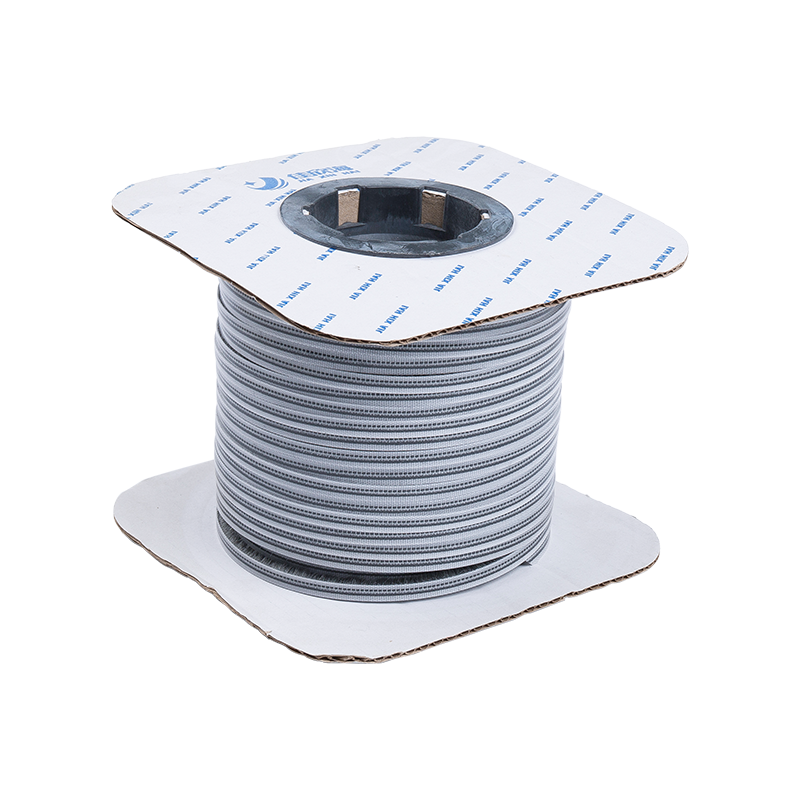
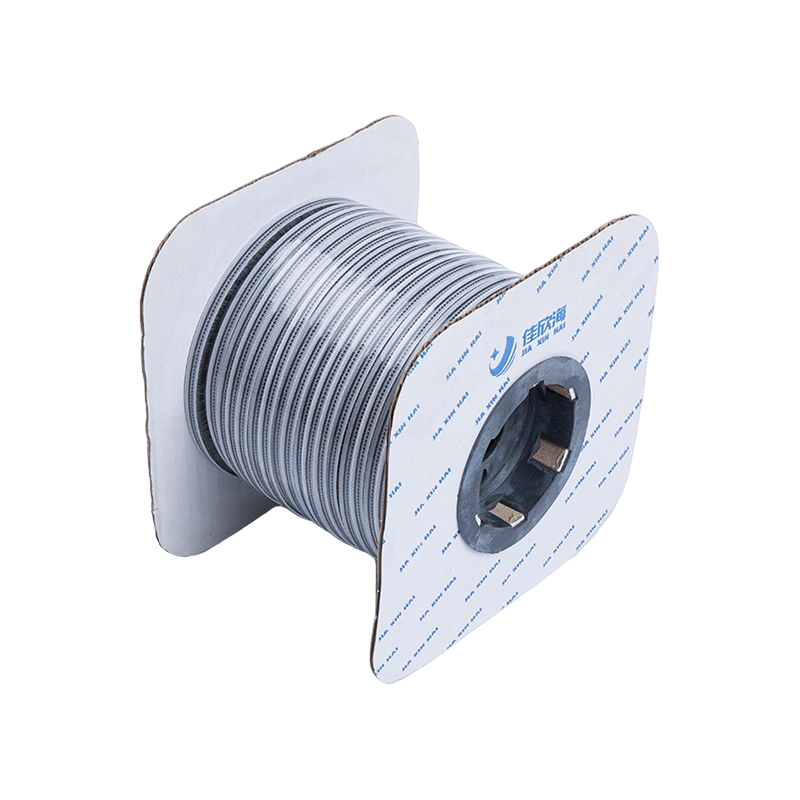
For doors and windows that cycle hundreds of times per day, a high-resilience woven strip with a strong pressure-sensitive adhesive handles both compression and shear without creeping. We supply this construction as the 3M high-resilience soundproof self-adhesive woven weather strip, a common choice for soundproofing and high-traffic entrances.
For metal and UPVC frames, a dense EPDM profile with a high-tack acrylic backing creates a firmer seal against weather and dust. The high-density self-adhesive EPDM rubber weather stripping door seal is a typical profile selected by fabricators who want a durable, directly bonded door seal without mechanical fasteners.
Where Custom Self-Adhesive Strip Solutions Deliver the Most Value
The value of a custom strip shows up in three recurring situations.
Commercial Doors and Aluminum Windows
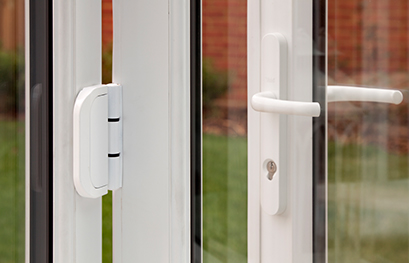
Commercial entrance doors and aluminum-frame windows face constant cycling, wind pressure, and cleaning chemicals. A custom strip with measured gap tolerances reduces air infiltration, blocks dust, and dampens street noise. Self-adhesive installation avoids mechanical fasteners, which can crack thin aluminum profiles and create future leak paths.
Sliding Doors and Partitions
Sliding elements need seals that tolerate friction and shear without creating drag. Adhesive-backed pile and woven strips fit this role well, and they can be fitted in a retrofit without disassembling the door leaf, which keeps labor cost low.
Automotive and Stationary Glass
Vehicle door and fixed-window sealing is inherently custom because body gaps vary across production batches. EPDM profiles with self-adhesive backing are commonly used for stationary windows and windshields where a reliable bond to glass or painted metal is required. The universal self-adhesive EPDM weather stripping for stationary windows and windshields is a typical profile for this class of work. The same logic applies to equipment enclosures, marine hatches, and RV doors, where the rules of material, profile, and adhesive remain identical.
How to Specify a Custom Seal Strip That Performs
A good specification is less about the rubber and more about the gap, the substrate, and the conditions the strip has to withstand. Follow this sequence:
- Measure the gap at several points. Specify compression between 20% and 40%; too little leaks, too much prevents closing.
- Identify the substrate. Aluminum, UPVC, steel, and glass each demand a specific adhesive selection.
- Define the temperature range for both the rubber and the adhesive tape.
- Choose hardness based on surface finish and the closing force of the door or window.
- Request a sample and run a simple long-term compression test to check compression set.
- Agree on profile tolerances, typically ±0.3 mm, and confirm cut length and packaging.
- Confirm the minimum installation temperature and the adhesive cure time.
For procurement teams, our professional tips for choosing high-quality EPDM rubber strips covers the common ordering mistakes, from undersized profiles to mismatched adhesives.
Getting the Specification Right the First Time
A correctly specified custom self-adhesive rubber seal strip pays for itself within the first heating or cooling season. The compound determines weather resistance, the profile controls compression, and the adhesive decides how long the strip stays in place. EPDM is the safe default for most exterior work, PVC fits indoor budgets, and silicone handles extreme conditions. Because the adhesive is the most common point of failure, it deserves as much attention as the rubber itself.
Fortex manufactures custom self-adhesive rubber seal strips to customer drawings or samples, with ISO 9001 quality control and in-house testing. We support OEM and ODM orders from sample validation to serial production. Send us your gap measurements, substrate details, and performance requirements — that is usually enough to recommend the right profile, compound, and adhesive on the first pass.